

General Strikes Demand Preparation
In the wake of ICE violence, enthusiasm for a general strike is soaring. But does the United States working class have the infrastructure to support a protracted and meaningful strike?

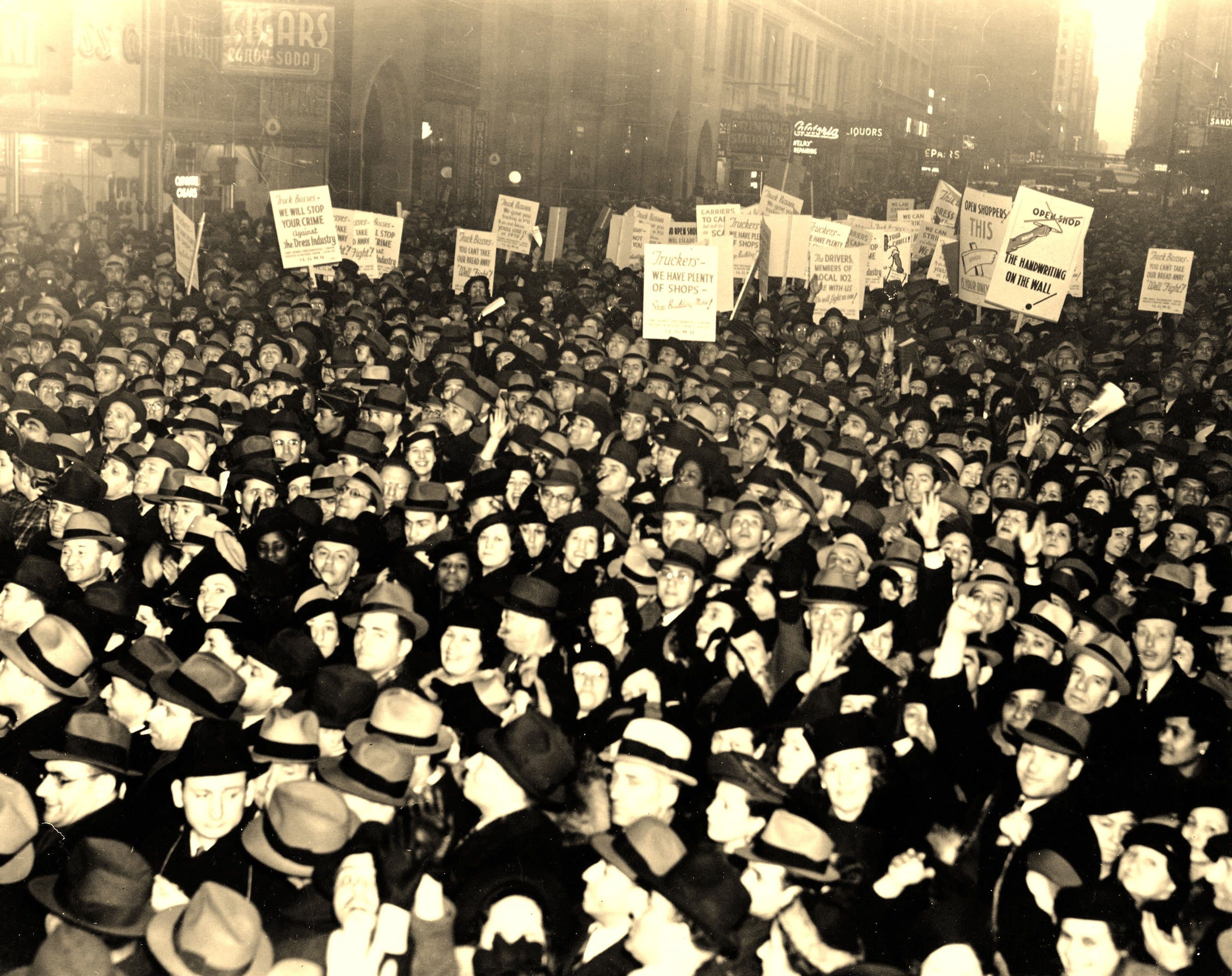
The well-documented and widely broadcast extrajudicial executions of Keith Porter, Renée Good, and Alex Pretti by ICE and CBP seemed to reflect a crucial inflection point in the public’s precipitously declining perception of the Trump Regime’s draconian immigration policy. The very same indignity perpetrated against those marginalized people being concentrated into festering and dilapidated camps has begun to leak out into segments of the population once believed to be invulnerable to such state sanctioned violence. A long-sought desire for a nationwide general strike seems to be developing mainstream appeal. On January 23rd, Minnesota held a (seemingly under-reported) single-day general strike in direct response to the televised carnage and tyranny inflicted by DHS, and the feasibility of a mass movement nationwide in scale seemed to be even more palpable.
For many on the American Left, the seemingly unattainable yet highly coveted general strike wields an almost mythical appeal, like a rapture which would liberate the working class from wage slavery. Others have not been so optimistic; Vivek Chibber, a professor of sociology who writes extensively for the popular left-wing magazine Jacobin, in an interview derided strike-hopefuls as “absolute clowns”, engaged in a fanciful fever dream and a delusion. While I think Chibber was curt and obstinate, there is merit to the idea that the infrastructure (and the social conditioning to create said infrastructure) for such an ambitious project is simply not available right now.
And when speaking on infrastructure, we don’t have to think entirely in abstract terms. Instead, we can look at historical precedence to imagine a concrete blueprint for what must be. In 1919, a year marked by waves of strikes across the US, one such action took place across Seattle. When workers engaged in a work stoppage to support shipyard workers besieged by stagnant wages in the face of rampant inflation, labor organizers ran the city of their own accord. Rather than simply picketing, they stood up milk stations to feed the populace and issued exemptions to keep certain vital services (like hospitals) operating in narrow contexts. In 1934, Minneapolis Teamsters similarly built a stand-in welfare state. They were able to sustain themselves through several months of work stoppage and violent confrontations with police and the National Guard, thanks in large part to their robust organization. Strike leaders leased a garage which served as a commissary, a hospital, and even a mechanic shop. Fleets of picket squads intercepted scabs. Months later, the strikers won a decisive victory: the Citizens’ Alliance employers group was disbanded, many more workers gained union representation, wages went up significantly across the board, and the victory inspired subsequent strikes across the country.
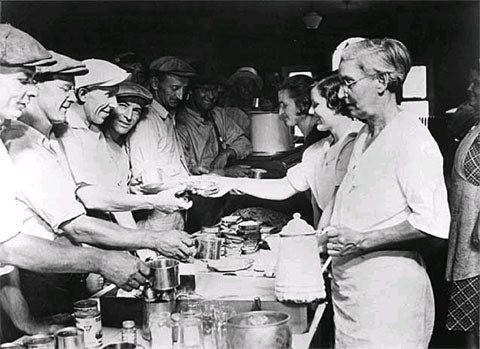
These strikers effectively built a “state within the state”, logistical machinery to feed, transport, and care for the populace while the normal modes of economic activity were interrupted or halted. This empowered them to be far more resilient in the face of economic paralysis. Today, however, we face a distinct challenge in the tension between spark and structure. German revolutionary Rosa Luxemburg famously celebrated the potential for “spontaneous” mass strikes, arguing that the revolutionary moment arises organically from the working class rather than by decree. But while the spark may be spontaneous, the sustenance cannot be. Without the infrastructure to maintain the strike long after the initial fervor extinguishes, the movement will be short-lived.
This is especially true given our modern adversary. Our opponents possess deep coffers and can weather a storm that would starve a disorganized workforce. Furthermore, the terrain of labor has shifted; with the rise of automation and the outsourcing of industrial labor, a general strike in a service-based information economy may not inflict the immediate paralysis that the blue-collar stoppages of the early 20th century did.
And so, this is all the more reason to focus considerable energy towards building worker-organized centers of power: systems of trade, welfare, and aid that we can lean upon despite the potential absence of traditional economic buttresses. As the late union organizer Jane McAlevey put it, mobilizing people who already largely agree with the message is one thing, but building a wider base through organizing is an entirely more ambitious and worthwhile project. Building bottom-up, constitutionally sound institutions which relieve worker dependency on the existing welfare state is part of a broader, protracted historical process necessary to make something like a general strike viable and successful.
You brought up some of the success of strikes in the past, and those impact the supply-side of the economic equation. To my mind (and I haven't thought about this nearly as much), a boycott could create the same disruption but on the demand side of the equation. It also feels far more tractable to boycott than strike, because in the short term employees retain their benefits and pay while companies (potentially/hopefully) struggle to sell. Even something like a one-week boycott of social media (could be targeted at a specific company e.g. all meta products and/or tiktok) would I think help to show these larger companies that they are in-fact reliant still reliant on the consumer and might remind a e.g. Zuck that its' not just daddy Trump he has to appease but also the populace.
A boycott also feels a bit more 21st century in that the US is not the manufacturing titan it once was, but our consumption is higher than ever. Maybe I am missing something significant in the dynamics of how a strike or boycott impact a company or public perception, but I just wanted to share my response to the article and get your thoughts.